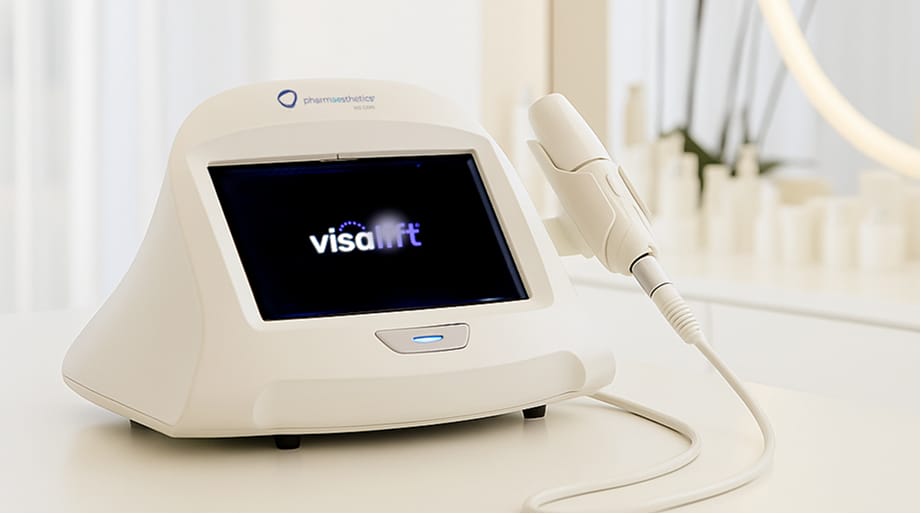

A highly technological tool with multiple purposes: this is microfocused ultrasound, a device that is winning over health professionals and their patients not only because of the quality of the results, but also because of its wide range of uses. At a time when anti-ageing treatments are being planned in ever greater detail, with the aim of both correcting annoying issues and preventing the signs of aging from becoming more pronounced, the device is gaining prominence and it's easy to understand why.
Firstly, using this type of energy is an excellent strategy for stimulating collagen synthesis and improving the quality of the fibers already present in the skin. The treatment gives the skin more density and elasticity.
A second important point is that, depending on the depth to which it is directed, ultrasound can reorganize other tissues in the face. Two examples: it can promote a muscle lift and a reduction in excess fat, which helps to redesign facial contours.
By working on the various layers that give structure to the face, microfocused ultrasound improves appearance in the short term and contributes to a slower, more controlled ageing process. What's more, it prepares the ground for other types of intervention - laser, radiofrequency, injections - that may take place later, boosting the results. In short, it combines efficiency with great patient satisfaction.
Increasingly refined technology
Microfocused ultrasound devices for aesthetic use appeared just over a decade ago and quickly established themselves as an excellent alternative for fighting the signs of ageing. They don't generate ablation and don't injure the skin - their action is below the surface, creating microcoagulation points. At the same time, they are able to act powerfully, providing very significant improvements. The latest versions have an even more refined action, without energy dispersion, which practically eliminates pain during the procedure. The patient only feels a slight warming and a subtle pulling, but without discomfort.
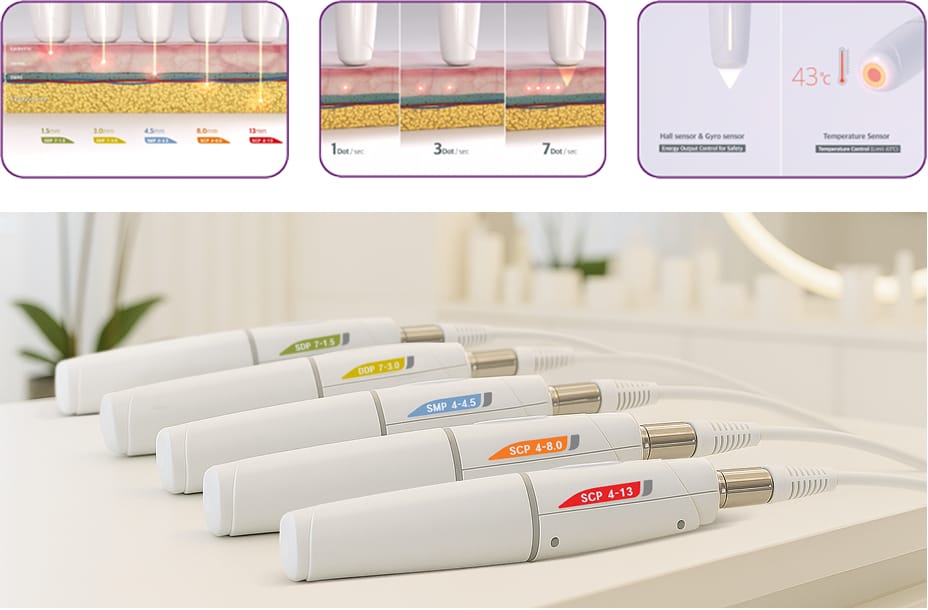
Visalift, the microfocused ultrasound in the Pharmaesthetics portfolio, has three different tips that can be used on the face:
- 1.5 mm: acts at the junction between the papillary dermis and the reticular dermis, an area with a large presence of fibroblasts, cell structures that produce collagen. “By acting on them, it stimulates the synthesis of new fibers, improving the density of the skin,” explains biomedical expert Isabel Garcia, speaker and scientific consultant for the company.
- 3 mm: goes a little further, reaching the deepest part of the dermis. The focus is on reorganizing existing collagen.
- 4.5 mm: the deeper-acting Visalift tip reaches the SMAS, the tissue that connects the subcutaneous fat and the muscles. It causes a contraction in this area, which brings about the lifting effect. This same tip can promote the reduction of excessive fat.
Frequency of treatment: customizing the schedule is ideal
The ideal frequency of microfocused ultrasound sessions is not standard: the protocol must be customized according to the patient's needs and time of life. “Older skin will require more interventions, which can take place over a shorter period of time,” explains Isabel Garcia. When the focus is on prevention, the applications are usually more spaced out. In other words, the interval between sessions depends on the condition of the skin and the goal to be achieved.
This flexibility in setting up the protocol is directly related to the evolution of technology. As the equipment has become more precise, it better preserves the surrounding tissues, acting only where you want it to. However, the specialist points out that everything must be calculated in such a way as to optimize the results without over-stimulating the skin. “The specialist must plan carefully because too much energy can lead to the opposite result to that expected, causing degradation instead of improvement,” she warns.
As for combining it with other technologies or injectables, she recommends that, at first, the specialist respects a spacing of one month between the microfocused ultrasound session and any other treatment. When the patient's follow-up becomes regular, it's possible to reduce the interval or even combine ultrasound with another therapy at the same time.
It's worth emphasizing that, like all technologies, microfocused ultrasound delivers the best results when combined with the best application techniques. That's why it's so important to seek out health professionals who are trained and experienced in treating with the device.